Passenger Rail Projects Could Speed Along Under New Bipartisan Bill
The Streamline Transit Act cuts federal red tape, allowing Ohio to fast-track rail NEPA reviews like highways. This could save years and millions on projects like a Cincinnati, Columbus, Dayton, Cleveland rail corridor.

December 18, 2025
Ryan Pecaut
We are living through a paradox in American infrastructure. There is broad support, within government and the public, that we need to expand passenger rail to accommodate growth and connect our cities. Yet, actually delivering these projects feels harder than ever.
The problem isn't always funding; often, it is the process. Regulatory mechanisms governing transit have become synonymous with delay. However, a new bipartisan bill in Congress, the Streamline Transit Projects Act (STPA), proposes a common-sense fix that could shave years off project timelines and save Ohio taxpayers millions.
Overview: What is the Streamline Transit Act?
Introduced in the 119th Congress, the STPA is sponsored by Congressman Mike Kennedy (R-UT) and Senator Mike Lee (R-UT), with notable bipartisan support from Senators Mark Kelly (D-AZ) and Raphael Warnock (D-GA).
At its core, the bill seeks to take already established highway policies and apply them to transit. Currently, state Departments of Transportation (DOTs) can assume federal responsibilities for environmental reviews on highway projects. Transit agencies, however, are largely tethered to a slower federal process.
The STPA would allow qualified state agencies to assume the legal responsibilities of the Federal Transit Administration (FTA) under the National Environmental Policy Act (NEPA). In simple terms, this moves the "Lead Agency" status from Washington, D.C., to States, allowing decision-makers who are closest to the project to sign off on approvals.
The American Public Transportation Association says this act "will cut red tape, speed project delivery, and help communities realize the benefits of better public transportation sooner"

The Highway Precedent: We Know This Works
This isn't an experimental idea. We already do this for roads.
Since 2005 (SAFETEA-LU) and 2012 (MAP-21), states have utilized "NEPA Assignment" for highway projects. The results from states that have adopted this model are compelling:
California (Caltrans): Reports saving 122 months on Final Environmental Impact Statements compared to the old baseline.
Texas (TxDOT): Eliminated layers of federal review, replacing them with internal quality control to move projects faster.
Utah (UDOT): Has passed four annual federal audits proving they can manage environmental protections just as strictly as the federal government, but much faster.

The Time Benefits: Ending the "Ping-Pong" Effect
Currently, federal environmental reviews suffer from a "ping-pong" effect. A transit agency submits a document, the FTA reviews it (30-60 days), sends comments back, and the cycle repeats 3 to 5 times.
By moving the authority to the state level, the drafter and the approver are in the same building. This eliminates the queue time at the federal level.
Current Reality: The median time to complete a federal Environmental Impact Statement (EIS) is currently 2.2 years, with many complex projects dragging on for 5 or more years.
The STPA Fix: Data suggests assuming federal authority can reduce review timelines by 12 to 25 months for complex projects.
Routine Projects: For simple things like purchasing new buses or station repairs (Categorical Exclusions), the timeline could drop from 2-6 months down to 1-4 weeks.

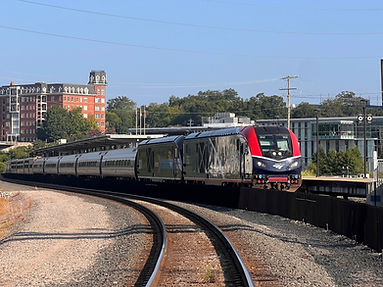
Rail Projects Could Be Years Shorter
For major rail corridors, time is literally money. In an era of high construction inflation, every month of delay erodes the purchasing power of infrastructure grants.
Consider a hypothetical $500 million rail project. If inflation is at 5%, a one-year delay adds $25 million to the cost. By using the STPA to accelerate the schedule by 12 months, we effectively generate $25 million in savings—money that can be reinvested into better stations, more frequency, or extended routes.
What This Means for Ohio’s Rail Future
For Ohio, the implications are massive. As we look toward the 3C+D passenger rail corridor (Cleveland-Columbus-Cincinnati-Dayton) and other expansion projects, the STPA offers a tool to control our own destiny.
Instead of waiting in a federal queue behind projects from New York or California, Ohio could set its own priorities. This allows for:
Faster Delivery: Getting trains running years sooner.
Local Accountability: Decisions are made by officials accountable to Ohio voters, not federal appointees.
Better Planning: Integrating local planning data directly into environmental reviews without federal redundancy.
It is important to note that this does not weaken environmental laws. The state must follow the exact same regulations (NEPA) and assume all legal liability. The standards remain high; only the bureaucracy is reduced.
The Streamline Transit Projects Act, if passed, represents a shift toward efficiency and local empowerment. It acknowledges that state agencies have matured and are capable of managing compliance. And for advocates of passenger rail and public transit could represent years of difference in the wait to climb all aboard.

Photos - flickr (CC): George Luchs, OHFalcon72, Jerry Huddleston

Ryan Pecaut
Ryan Pecaut is the communications strategy lead at All Aboard Ohio and a career professional in transportation analytics



ABOUT ALL ABOARD OHIO
All Aboard Ohio is a non-profit, member-based organization dedicated to promoting improved public transportation and passenger rail service throughout the state.
Founded in 1973 and incorporated as a registered 501c-3 in 1987, All Aboard Ohio has spent more than 50 years advocating, educating, and working towards our goal of a connected Midwest
All Aboard Ohio is a 501c-3 nonprofit with over 50 years of advocacy work, advocating for improved public transportation and passenger rail service in the Midwest
©2025 by All Aboard Ohio
Get in Touch
3136 Kingsdale Center,
#112 Columbus, OH 43221
Federal Tax ID: 31-1066182


