Airfares are Outpacing Inflation Amid Stagnate Ridership as Amtrak Grows
Today's consumer price index showed that inflation has slowed slightly, but as travelers navigate the busy summer season of 2026, a divergence in transportation costs is leading to changes in consumer behavior.

July 14, 2026
Ryan Pecaut
Today's consumer price index showed that inflation has slowed slightly, but as travelers navigate the busy summer season of 2026, a divergence in transportation costs is leading to changes in consumer behavior. While commercial aviation is increasingly defined by intense price volatility and soaring ticket costs, national ground transportation networks like intercity rail and bus systems are proving to be bastions of economic stability.
Widening Price Gap: Skies vs. Ground
The core driver of this modal shift is the prohibitive cost of flying. The airline industry, sensitive to fluctuating fuel prices, increased labor costs, and ongoing operational frictions, has aggressively passed these expenses onto consumers.
According to recent economic data, airfares have decoupled from broader inflation trends. In June 2026, airline fares spiked by 26.5% compared to the previous year. While the gap between airfare inflation and the overall Consumer Price Index (CPI) inflation rate of 3.5% narrowed very slightly from May, airline prices continue to severely outpace standard consumer goods.
In contrast, intercity rail and bus networks have shielded consumers from extreme price shocks. Because ground transit models are often bolstered by public infrastructure investment and long-term state support, they are fundamentally less exposed to the aggressive market swings seen in aviation.
Does this Pricing Drive Behavior?
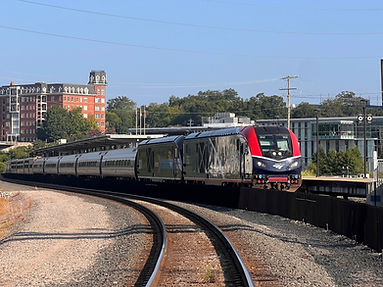
Consumers are acting differently. Amtrak, America's national rail operator, achieved an all-time ridership record in Fiscal Year 2025, facilitating 34.5 million passenger trips, a solid 5.1% increase over the previous year and growth in ridership on most routes. This momentum has continued into 2026, with first-quarter figures showing a sustained 4.7% year-over-year growth.
At the same time the U.S. airline industry is seeing some drop in load factors: the percent of miles traveled with paying customers. Looking at the 12 months ending in April 2026, the overall U.S. load factor was 81.8%, a drop from the 82.6% load factor achieved during the same 12-month period ending in 2025. The total number of passengers is trending flat to down in the U.S. market.
The motorcoach industry is seeing new route expansions but 2026 trend data on ridership was not available at time of publishing.
Summary
The sentiment and trend is that travelers are experiencing sticker shock when trying to book flights. The cost of air travel has surged dramatically and while flights are available consumers are choosing to take trains, buses, or even relying a bit more often, on their car.

Ryan Pecaut
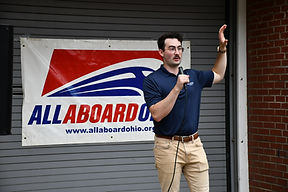
Ryan Pecaut is the communications strategy lead at All Aboard Ohio and a career professional in transportation analytics


ABOUT ALL ABOARD OHIO
All Aboard Ohio is a non-profit, member-based organization dedicated to promoting improved public transportation and passenger rail service throughout the state.
Founded in 1973 and incorporated as a registered 501c-3 in 1987, All Aboard Ohio has spent more than 50 years advocating, educating, and working towards our goal of a connected Midwest
All Aboard Ohio is a 501c-3 nonprofit with over 50 years of advocacy work, advocating for improved public transportation and passenger rail service in the Midwest
©2025 by All Aboard Ohio
Get in Touch
3136 Kingsdale Center,
#112 Columbus, OH 43221
Federal Tax ID: 31-1066182


